

How the De Beers Lab Develops Diamond Materials for Global Innovation

Diamonds Beyond Jewelry
For many people, the name De Beers is closely linked to fine jewelry and natural gemstones. Less visible to the public is another side of the company’s work—one that focuses on advanced materials rather than luxury products. At the De Beers Lab, formally known as Element Six, diamonds are developed not for display, but for use in science, engineering, and high-tech industries
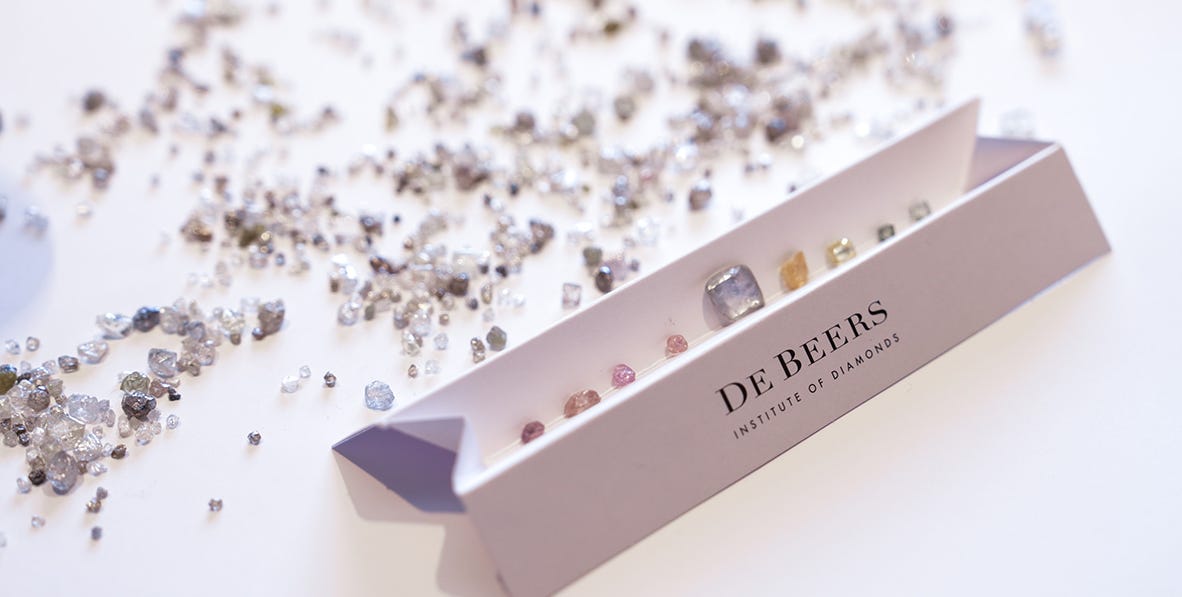
Here, diamonds are valued for their physical properties rather than their sparkle. These engineered diamonds are designed to perform in environments where conventional materials reach their limits.
What Are Synthetic Diamonds?
Synthetic diamonds are real diamonds. They share the same crystal structure as natural stones, but instead of forming deep underground over millions of years, they are created in controlled laboratory conditions.
At the De Beers Lab, scientists rely on two main techniques:
High Pressure, High Temperature (HPHT), which replicates the natural formation process
Chemical Vapor Deposition (CVD), which grows diamond layers atom by atom
These methods allow engineers to tailor diamonds with precise and consistent characteristics. The result is a material optimized for performance, reliability, and repeatability—key requirements for industrial and scientific applications.
How the De Beers Lab Uses Diamond Technology
Research and development at Element Six focuses on applying diamond’s unique properties across multiple fields. The work broadly falls into three major areas.
1. Ultra-Hard Industrial Materials
Diamond is the hardest known natural material, and its synthetic form retains this advantage. Tools made with engineered diamonds are used in:
Precision cutting and grinding
Mining and drilling operations
Advanced manufacturing and machining
Electronics production equipment
These applications benefit from longer tool life, cleaner cuts, and reduced material waste, helping manufacturers improve efficiency and sustainability.
2. Thermal Management and Electronics
One of diamond’s lesser-known qualities is its exceptional ability to conduct heat. It outperforms metals like copper and silver, making it highly valuable in electronics.
At the De Beers Lab, diamond solutions are developed for:
Power electronics
Semiconductor heat spreaders
High-performance computing systems
Data center thermal management
As computing demands increase—particularly with the growth of artificial intelligence—effective heat control has become critical. Diamond-based thermal systems are increasingly viewed as a practical solution rather than an experimental one.
3. Optics, Lasers, and Advanced Sensors
Synthetic diamonds can also be engineered for optical clarity and durability. This makes them suitable for extreme conditions where traditional glass or ceramics fail.
Applications include:
Medical and surgical laser systems
Radiation and particle detectors
Aerospace and defense optics
High-precision scientific instruments
Their resistance to heat, pressure, and radiation allows equipment to operate reliably in demanding environments.
Diamonds in Quantum and Next-Generation Computing
One of the most advanced research areas at the De Beers Lab involves quantum technologies. Scientists introduce carefully controlled atomic defects—known as nitrogen-vacancy (NV) centers—into diamond crystals.
These NV centers allow diamonds to function as sensitive quantum components. They are valued because they are:
Highly stable at room temperature
Resistant to radiation and interference
Capable of detecting magnetic and electric fields at nanoscale levels
As a result, diamond-based systems are being explored for quantum sensing, secure communications, advanced cryptography, and precision measurement technologies.
Industrial Impact Across Sectors
Synthetic diamonds developed at Element Six are already influencing a wide range of industries, including:
Healthcare: surgical tools, diagnostic equipment, and laser-based treatments
Aerospace: machining of advanced alloys and composite materials
Automotive: electric vehicle production and precision gear manufacturing
Telecommunications: high-frequency and high-power components
Semiconductors: chip cooling and performance enhancement
Clean energy: fuel cell research and advanced solar technologies
In each case, diamond enables processes that would be difficult or inefficient using conventional materials.
Clarifying a Common Misunderstanding
Synthetic diamonds produced at the De Beers Lab are often confused with lab-grown diamonds sold for jewelry. While both are created in laboratories, they serve very different purposes.
Lab-grown jewelry diamonds are designed for consumer markets
Element Six diamonds are engineered materials for industrial and scientific use
The De Beers Lab is focused on material science and technological advancement, not replacing natural gemstones in the luxury market.
A Broader View of Innovation
The work carried out at the De Beers Lab reflects a broader shift in how diamonds are understood and used. Beyond their cultural and economic value as gemstones, diamonds are increasingly recognized as high-performance materials with applications that extend into computing, medicine, energy, and advanced manufacturing.
By combining materials science with long-term research, the De Beers Lab plays a role in expanding how one of nature’s hardest substances can be adapted to meet modern technological challenges—quietly shaping innovation far beyond the jewelry counter.